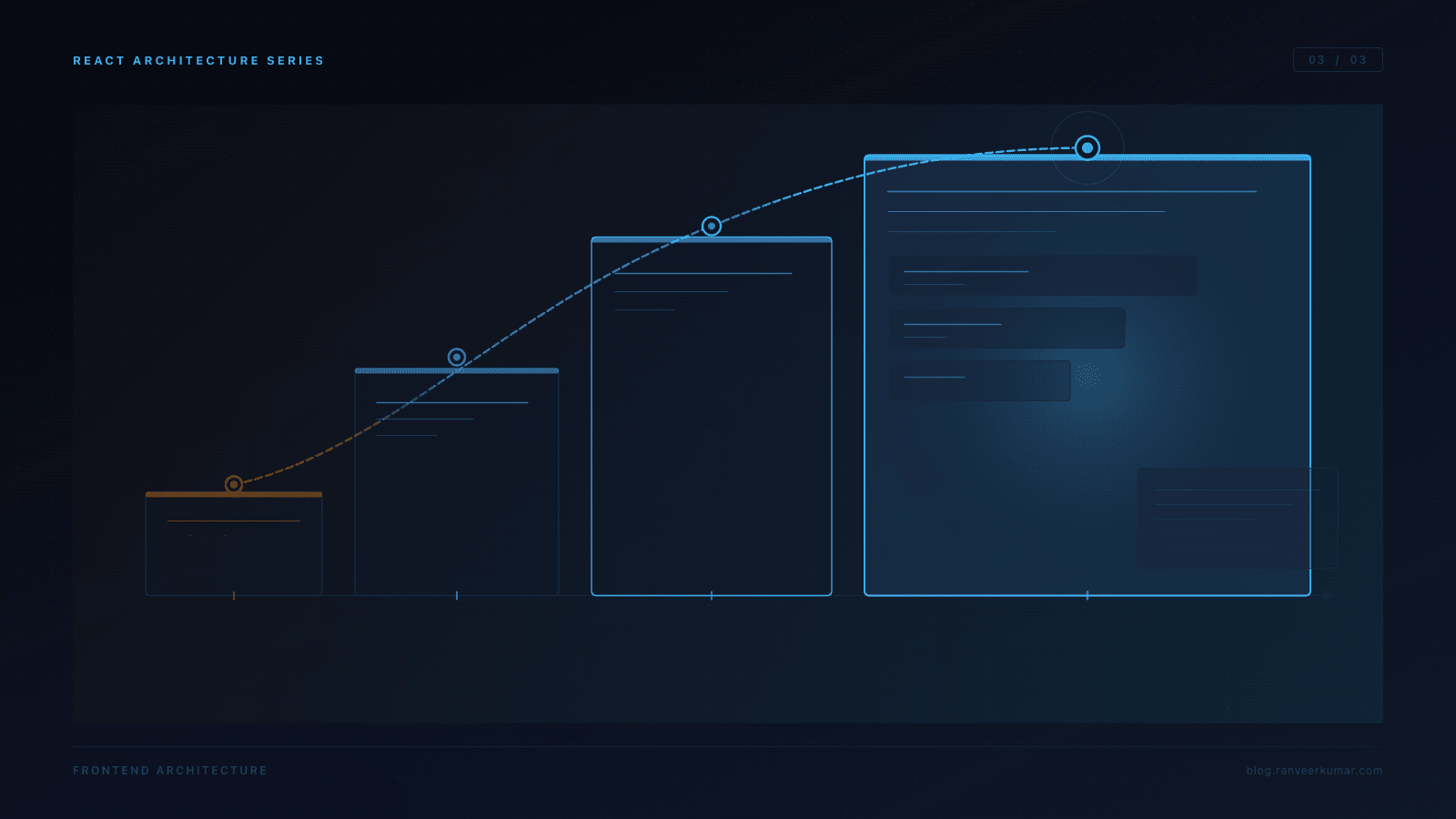
Frontend platform thinking begins when teams stop asking, "What can we share?" and start asking, "What should product teams never have to solve from scratch again?"
That shift sounds subtle, but it changes the work. Shared utilities optimize for reuse. Platforms optimize for dependable movement.
The Platform Is the Path
A frontend platform is the paved path for building product experiences. It includes code, but it also includes standards, examples, release practices, observability, and the social contract between product teams and platform owners.
The value of a platform is measured by how confidently product teams can move without asking for permission.
What Belongs in the Platform
Not every shared concern belongs in the platform. The platform should own decisions that are expensive to reverse, easy to fragment, or risky when implemented inconsistently.
- Application shell and navigation patterns.
- Design token integration.
- Authentication and authorization surfaces.
- Data-fetching conventions.
- Error boundaries and empty states.
- Performance budgets.
- Accessibility expectations.
- Analytics and experimentation hooks.
The Product Interface
The best platform teams design for product engineers as their primary users. That means documentation is not enough. Teams need working examples, migration paths, codemods where appropriate, and clear ownership for questions that do not fit the happy path.
| Platform Capability | Product-Team Benefit |
|---|---|
| Route and layout conventions | Faster page delivery |
| Shared data patterns | Fewer state bugs |
| Design-system primitives | More consistent UX |
| Build and release guardrails | Lower operational risk |
Where Design Systems Fit
Design systems are a vital part of the frontend platform, but they are not the entire platform. A button can be perfectly designed while the product experience around it remains slow, inaccessible, or structurally inconsistent.
Platform Work Needs Product Management
Platform backlogs become messy when every request is treated as internal support. Mature teams define platform outcomes: reduced duplicate decisions, faster onboarding, fewer release incidents, better Core Web Vitals, higher accessibility confidence, and clearer ownership.
The First Version Can Be Simple
Start with a narrow paved path:
- A reference app structure.
- A typed content or data contract.
- A small set of approved UI primitives.
- A testing and metadata convention.
- A migration story for existing product surfaces.
The goal is not to centralize all frontend work. The goal is to centralize the decisions that make decentralized work safer.